

Hand-Painted: Late
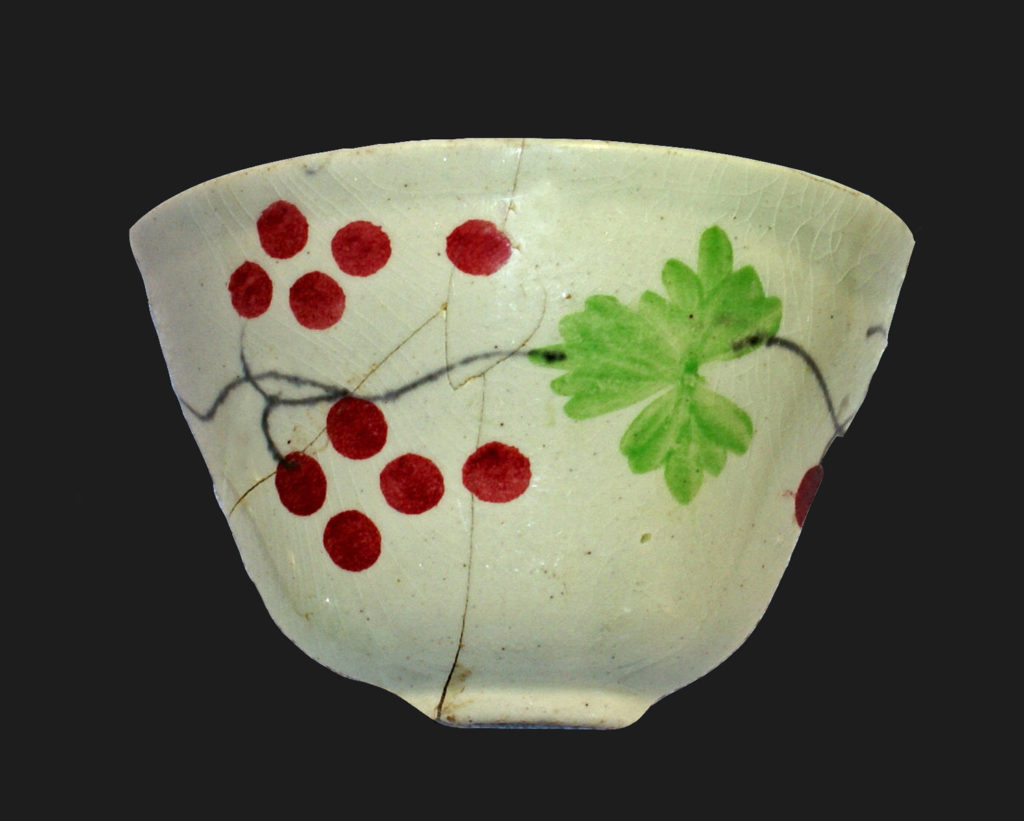
This decorative type is found on refined white earthenware and ironstone ceramic vessels. The late palette includes chrome-based colours such as black, red, and true yellow and green. This is in contrast to the more earthy colours present in the early palette, such as mustard yellow and brown. Late palette motifs are often floral and […]
Old Don Jail Cemetery 2: Exhumation & Reburial
This particular reports details the exhumation and reburial process, as well as two-dimensional facial reconstructions for Burials 1, 3, and 5, drawn by professional forensic artist Victoria Lywood.
Old Don Jail Cemetery 1: Investigation
In 2007, ASI was retained to examine a burial area of Toronto’s Old Don Jail. The investigation led to to the discovery of fifteen individuals who were all hanged at the jail between 1872-1930. The report details the discovery of the unapproved cemetery and the subsequent identification of individuals.
The Archaeological History of the Wendat to A.D. 1651: An Overview

The foundations for modern scholarship concerning Wendat history and archaeology were laid in the late nineteenth and early twentieth centuries by researchers, such as Andrew Hunter and Arthur Jones, investigating hundreds of sites and ossuaries that had been reported to provincial authorities. The focus of their work and of the work of many of those […]
Transfer Print

[distance1] According to Snyder (1997:9), “transfer printing allowed a potter to quickly duplicate a pattern by transferring it from an [engraved] copper plate to a ceramic vessel via a specially treated paper. Transfer printed patterns appealed to consumers as the process afforded them the opportunity to purchase complete sets of dishes that were virtually identical, a […]
Redware
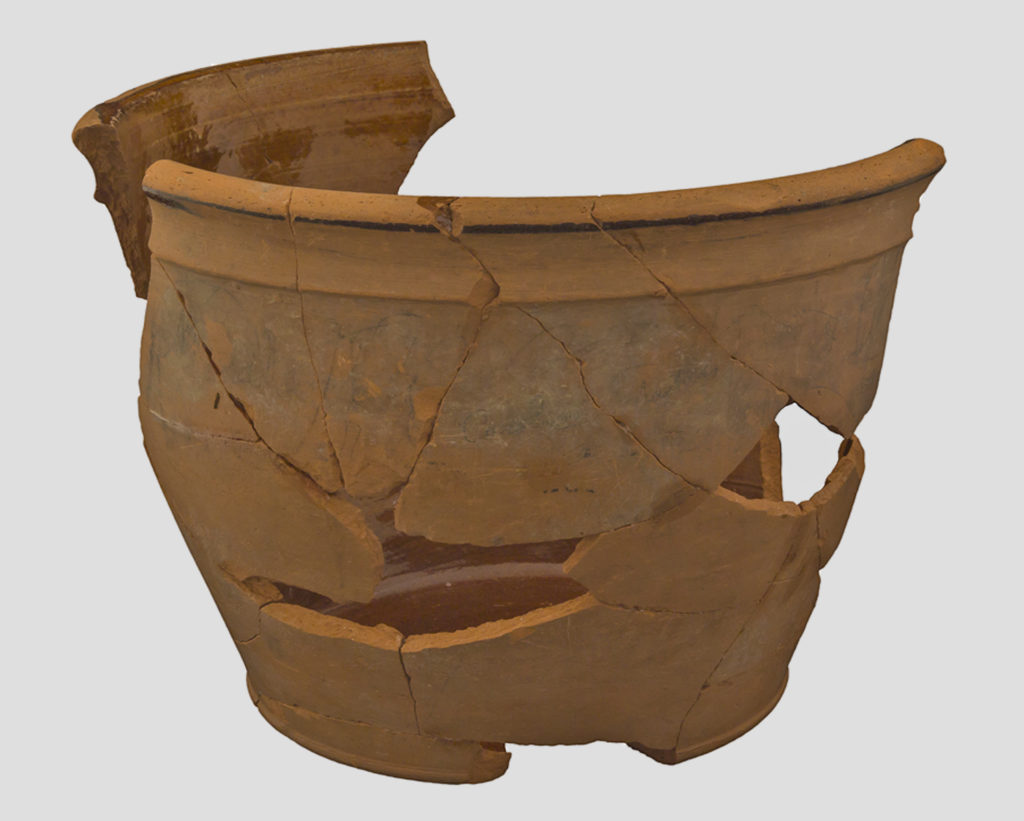
[distance1] Also known as coarse red earthenware, redware demonstrates a heavy, thick, clay body that must be glazed (lead glaze) in order to be non-porous. In general, these utilitarian vessels were used in the kitchen and dairy for food preparation and storage. Although made in many different places, the fragility of the vessels (they were easily […]
McNair Site
The McNair site was a 1.0 hectare village occupied during the middle of the fifteenth century AD. A sizable and noteworthy ceramic assemblage was recovered from McNair including 539 analyzable vessels, 184 miniature or juvenile vessels and 433 smoking pipe fragments.
Elmbank Church and Cemetery
In advance of construction for a new runway, taxiway and deicing facility at Lester B. Pearson International Airport, ASI was retained to excavate the structural remains of a nineteeth-century Catholic church and rectory, as well as exhume and rebury a total of 622 individuals from its associated cemetery. The vast majority of those interred at Elmbank were […]
Factory Slip: Banded
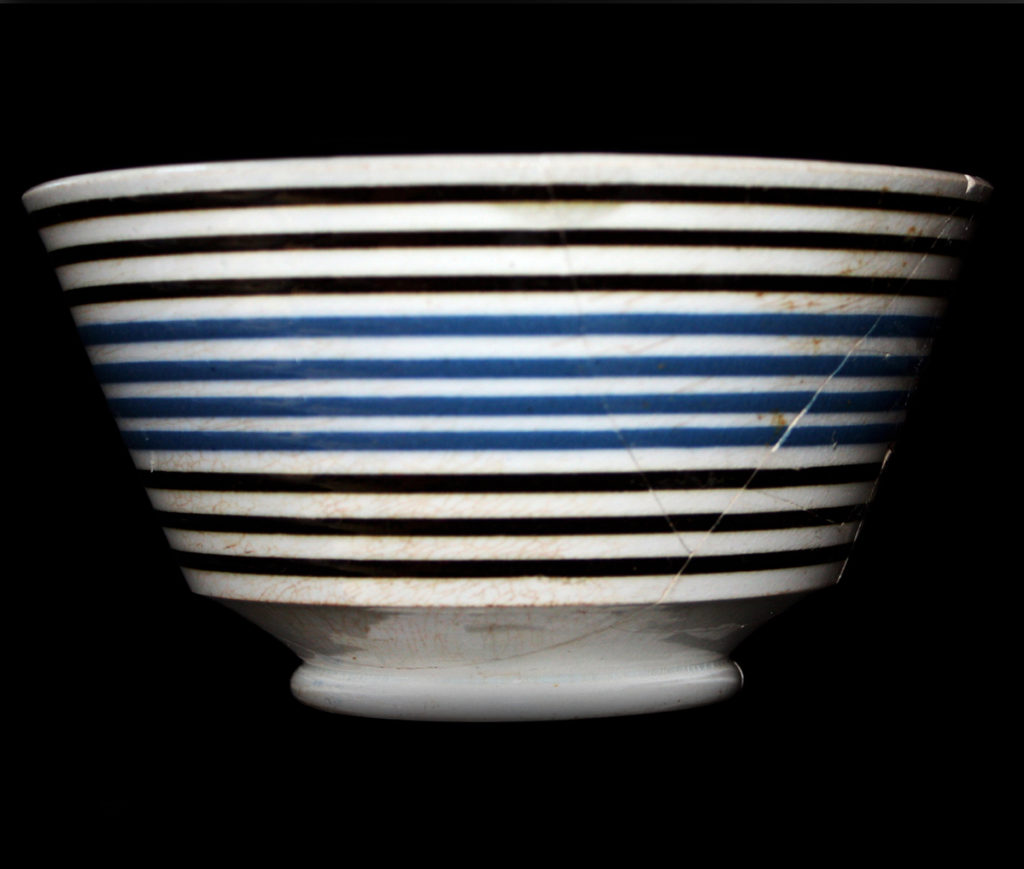
Banding, the application of bands of colored slip to a vessel, was a long-lived decorative technique in dipped earthenware. Bands of slip were added to the ceramics by trailing them with a slip bottle onto a vessel mounted horizontally on a turning lathe. These wares are sometimes referred to as “annular wares,” a collector’s […]
Government House
As part of the the production of a War of 1812 documentary film, ASI was retained to excavate an exploratory trench in order to locate the remains of the Government House on the grounds of the Fort York National Historic Site. A total of 3,986 Euro-Canadian artifacts related to the house and Fort York were […]