

Movember: Moustache Teacup

In honour of Movember, we wanted to show you the moustache teacup we found at the mid-to-late nineteenth century Weir I site in Scarborough. This teacup is nearly complete, with a floral decalcomania motif. Moustache teacups were made with a semicircular ledge on the inside to protect one’s highly-styled and waxed moustache from steaming tea. A small opening in the ledge would allow the tea […]
Queen’s Wharf Schooner
(LiDAR Capture)

In May 2015, ASI archaeologists discovered a schooner dated to the early nineteenth-century during an archaeological assessment of the Fort York Boulevard and Bathurst Street area, downtown Toronto. The mast step of the ship yielded an American penny, dated to 1827, which provided the date and origin for the schooner. (To learn more about “mast stepping” […]
The Humble Nail

The humble nail is one of the key tools that we use to date historical sites. Three major types of architectural nails are found on Ontario sites, as well as the horseshoe nail. Hand-wrought nails: Square, or nearly so (in cross section), usually tapered to the point; head may be “rose shaped” (domed); common to 1830. […]
Etharita: Highlights from Charlie Garrad’s Collections
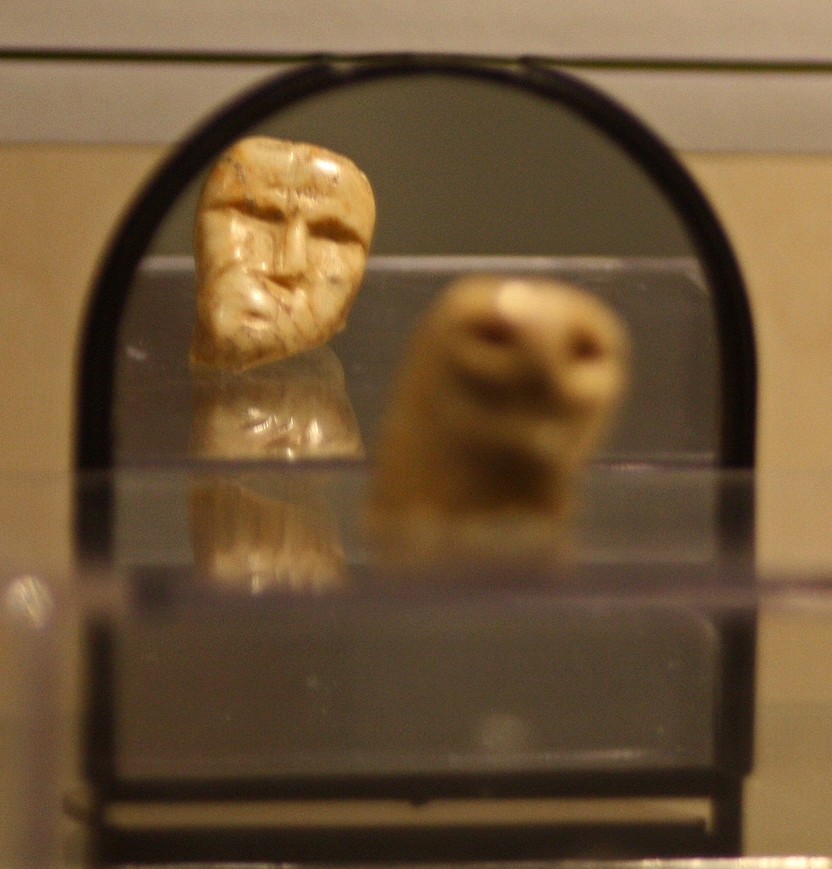
For the last few years ASI has been working on housing Charles Garrad’s amazing collections of artifacts from the Collingwood area. Garrad was the former president of the Ontario Archaeological Society, and the first licensed archaeologist in Ontario. The material he recovered is truly world-class, so we decided to highlight one particular site that he […]
The John Elford Bottles

Every artifact has a story to tell, as is the case with these three bottles excavated from the John Elford site near Courtice, Ontario. This bottle from the Northrop & Lyman Co. of Toronto held one of many purportedly medicinal concoctions the company marketed out of its Toronto warehouse beginning of 1874. The history of the […]
Mast Stepping: The Schooner Penny

Over the centuries, minted metal coins have been used to purchase everything from slaves to bread. The power such a small object possesses in society is incredible and often goes way beyond a simple transaction in a shop, market stall or even international banking. The recent discovery of an early 19th century American penny (circa […]
The Lower Canada Rebellion Penny

This featured artifact was a politically-charged little coin back in its day… Due to a chronic shortage of small coinage in the mid 1830s, banks were permitted to mint their own to fill the gap. This coin, found at the Botsford Site near Newmarket in 2003, is known as a “Bouquet Penny” or “Rebellion Penny” because […]
Syphilitic Skull of Frederick Davis

In 2007, ASI was retained to exhume and identify a group of hanged prisoners from the Don Jail cemetery site in Toronto. This particular individual is Frederick Davis, who was convicted of a gruesome murder in 1920. He was executed on May 9, 1922 at about 46 years of age. Prior to his arrest, the Toronto […]
The Burgoyne Bridge

As Canada’s leading cultural resource management firm, ASI is dedicated to, as our motto aptly states, “To best preserve our cultural heritage legacy in any planning and development context.” To that end, we employ many tools from our toolbox that are not necessarily trowels and shovels. The Burgoyne Bridge in St. Catharines, Ontario, is an […]
Queen’s Wharf 3D Artifacts

A 3D view of the caulking iron recovered with the schooner at the Queen’s Wharf site. Queen’s Wharf Caulking Iron by ASI on Sketchfab A 3D view of a mallet recovered with the schooner at the Queen’s Wharf site. Queen’s Wharf Mallet by ASI on Sketchfab A 3D view of a pulley block recovered […]