

Projectile Point with Embedded Fossil

This projectile point fragment was discovered during field walking and it contains the extra surprise of a tiny, fossilized bivalve shell embedded inside the grey and white chert. Because were are missing the base and tip of this point, we can’t identify the exact age or style of this tool. It was also found in the middle of a small […]
Transfer Print: Floware

Floware is a specific type of transferprint with a blurred, watery effect. This decoration is created by exposing the surface of the ceramic to chlorine in the kiln, which causes the colours to “flow.” This motif features two distinct colours; blue or mulberry, with the dark purple mulberry pigment often reading as almost black. Floware occurs […]
Hand-Painted: Monochrome Blue

Monochrome blue is a specific style of hand-painted decoration that is applied using an all-blue palette. It usually features floral designs, but may also include geometric designs. For our own classification, we exclude handpainted Asian-style themes from this motif, which we instead designate as Chinoiserie. The popularity of blue and white ceramics can be traced back […]
Hand-Painted: Chinoiserie

Handpainted chinoiserie motifs show up on some of the earliest ceramics we discover in Ontario, and they are always a pleasure to discover. These early Asian-themed motifs appear most often on tin-enamelled earthenware, creamware, and pearlware. Chinoiserie is an early example of globalization, as British ceramic manufacturers attempted to replicate the popular motifs and colourways of […]
“He Must Die Unless the Whole Country Shall Play Crosse:” The Role of Gaming in Great Lakes Indigenous Societies
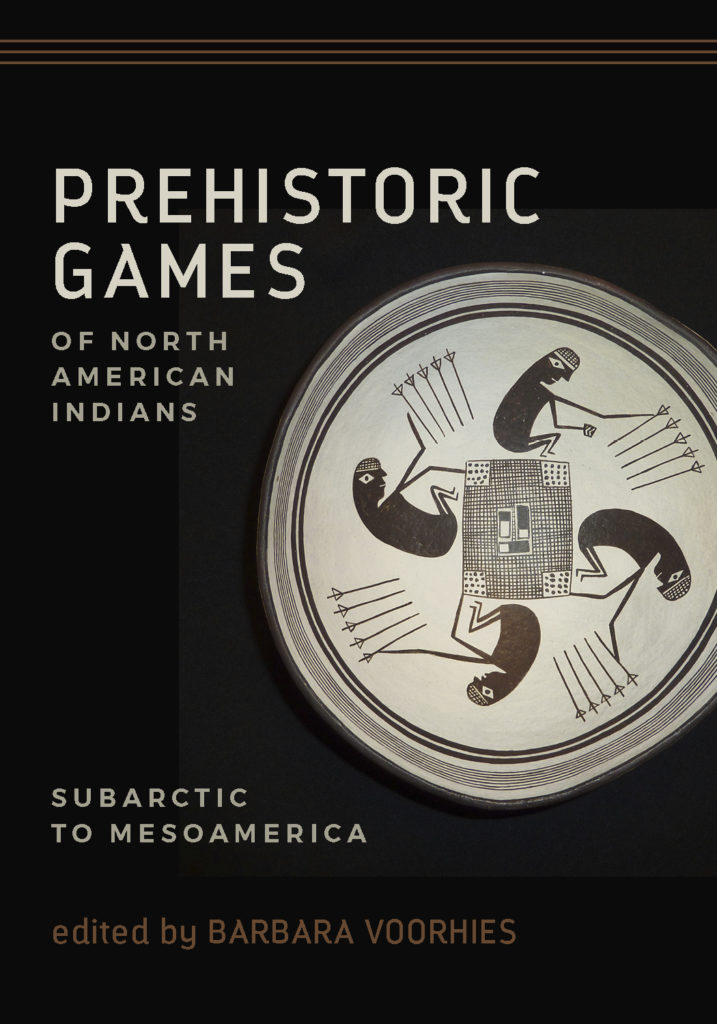
Prehistoric Games of North American Indians is a collection of studies on the ancient games of indigenous peoples of North America. The authors, all archaeologists, muster evidence from artifacts, archaeological features, ethnography, ethnohistory, and to a lesser extent linguistics and folklore. Chapters sometimes center on a particular game (chunkey rolling disc game or patolli dice […]
Multi-Scalar Perspectives on Iroquoian Ceramics: Aggregation and Interaction in pre-Contact Ontario
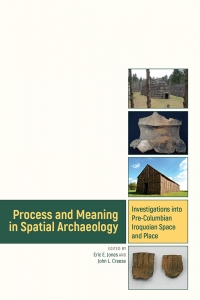
The research in this volume represents a new wave of spatial research—exploring beyond settlement patterning to the process and the meaning behind spatial arrangement of past communities and people—and describes new approaches being used for better understanding of past Northern Iroquoian societies. Addressing topics ranging from household task-scapes and gender relations to bioarchaeology and social […]
Early Archaic Nettling Point

We present to you a 3-D scan of a gorgeous Early Archaic Nettling point discovered this past winter by our Field Director Robb Bhardwaj, who shared his story of discovery with us: Nettling Projectile Point by ASI on Sketchfab “Sometimes in archaeology, artifacts seem to want to be found. I came upon just such an […]
Maize, Fish, and Deer: Investigating dietary staples among ancestral Huron-Wendat villages, as documented from tooth samples
Following the entry of Zea mays to northeast North America, Northern Iroquoian populations expanded their numbers and range. Isotopic values from bone collagen have shown fluctuations in reliance on this dietary staple. With permission of the Huron-Wendat Nation of Wendake, Quebec, we measured d13Cenamel, d13Cdentine and d15Ndentine from 167 permanent teeth, retained before reburial of […]
Organizational Complexity in Ancestral Wendat Communities
During the late fifteenth and early sixteenth centuries, the Northern Iroquioan societies of northeastern North America experienced a process of widespread settlement aggregation. In southern Ontario, Canada, dozens of small villages came together into fewer large, nucleated settlements with populations of up to 1,500 to 2,000 individuals. The formation of these coalescent communities resulted in […]
Navigating ancestral landscapes in the Northern Iroquoian world
After the transition to settled village life ca. AD 1300, the Northern Iroquoian peoples of northeastern North America relocated their settlements every few decades or less. Frequent village location meant that, after less than 100 years, the landscape they inhabited would have contained more abandoned than occupied village sites. We draw upon ancestral Wendat site […]